St. Croix Cistern Home Inspection: What to Check Before Closing
September 24, 2026
September 24, 2026
A buyer flies down from the mainland, tours a hillside property outside Christiansted, falls for the trade wind breeze off the gallery, and writes an offer. The inspector comes through a few days later. Roof: sound. Electrical panel: up to code. Cistern: present, pump running, water flowing to every fixture. The report reads clean. The buyer closes with the kind of confidence a passed inspection is supposed to produce.
Then August comes, the rain slows, and the water pressure starts dropping by the week. Nobody lied on the inspection report. Nobody missed anything they were asked to check. The problem is that "the cistern is functioning" and "the cistern will hold enough water to get you through a dry season" are two different claims, and only one of them gets tested during a standard walk-through.
That gap is the thing worth understanding before you're the one signing at closing.
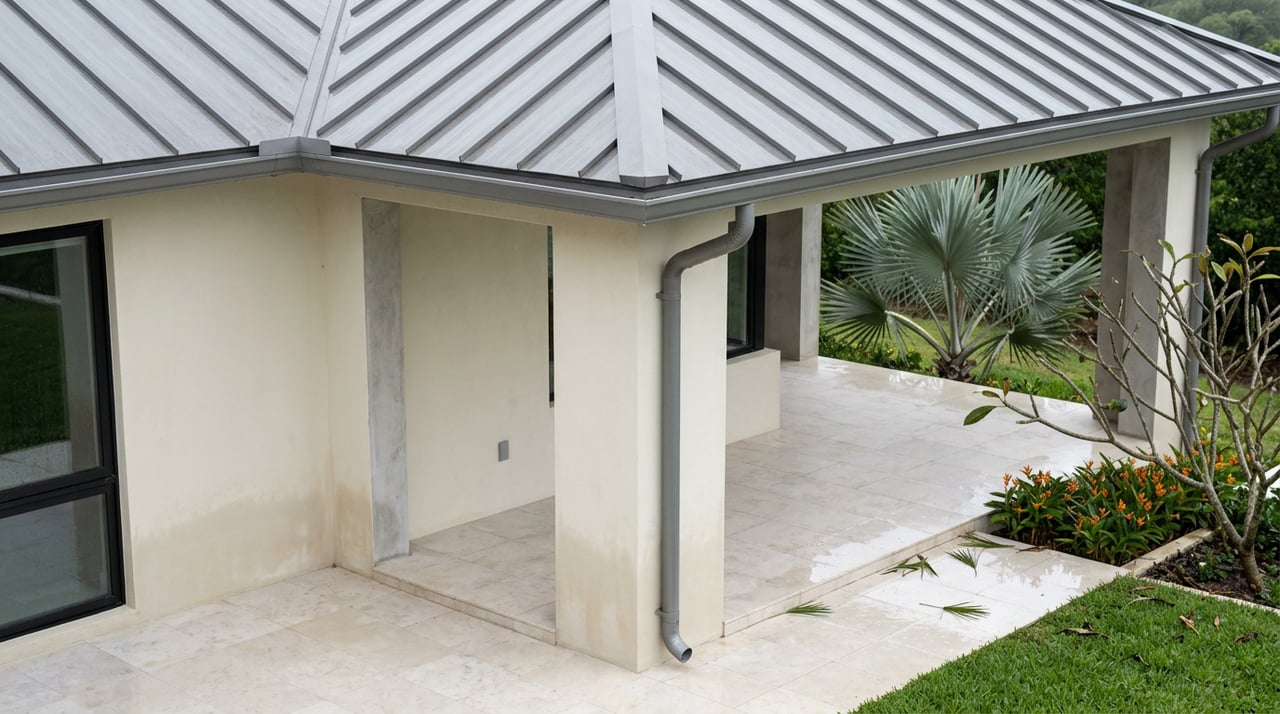
Most of the buyers Sterling Point works with are coming from places where water arrives through a municipal pipe and a home inspection is built around that assumption: check the fixtures, run the taps, confirm pressure, move on. On St. Croix, that assumption only holds in a narrow slice of the island. Piped water service from the Water and Power Authority reaches homes in and near Christiansted and Frederiksted. Outside those two areas, which is most of the island's residential inventory, including the hillside and coastal properties that draw off-island buyers in the first place, the house supplies its own water by catching rain off the roof and storing it underground.
A standard inspection can confirm the pump turns on and water reaches the shower head. It was never designed to answer the two questions that actually matter for a rainwater-dependent house: how much water is really in there right now, and is the tank itself sound enough to hold it. Those require a different kind of look, and on St. Croix, they're often the ones that get skipped.
The Virgin Islands Code does set a real standard. Title 29, Section 308 requires that cisterns for dwellings hold a minimum usable capacity of 10 gallons for every square foot of roof area on a one-story building, and 15 gallons per square foot on a building of two or more stories. A well can substitute for a cistern only if it's shown to supply water that's safe and continuously adequate, with the territory's health department certifying it before a permit is issued.
That's a real number, and it's a useful one to know when you're comparing properties. But read it carefully and you'll notice what it actually guarantees: a size, verified once, at the time of construction. It says nothing about the condition of that tank ten, twenty, or forty years later. A cistern built to code in 1995 and a cistern that's been slowly leaking since 2015 look identical on paper. Nobody re-certifies capacity at resale. The code sets a floor at the moment the permit is stamped and then goes silent.
The part of island cistern ownership that doesn't show up in a code citation is that these tanks move. St. Croix sits in a zone with frequent small seismic activity, most of it too minor to feel, and that steady low-level shifting is enough to open hairline cracks in cinder block cistern walls over time. It's a well-known enough pattern among long-time owners that newer construction has shifted toward poured concrete or reinforced block treated with a water-resistant additive, and where older block cisterns do develop slow leaks, the common fix on-island is a flexible vinyl liner installed inside the existing tank rather than repeated resealing of the walls.
None of that is a defect in the sense of bad construction. It's closer to a maintenance reality that comes with the territory, similar to knowing a roof will eventually need recoating. But it means the honest question for a buyer isn't "does this house have a cistern." It's "when was this specific cistern last opened up, measured, and checked for cracks," and that question sits outside what most general inspectors are scoped to answer.
Here's roughly how the two levels of review differ in practice:
| What a general home inspection typically checks | What a cistern-specific evaluation adds |
|---|---|
| Pump powers on, water reaches fixtures | Actual gallons currently stored, measured against rated capacity |
| Visible access hatch is present | Interior tank walls checked for hairline cracks or active seepage |
| Filtration or UV equipment is installed | Water tested for bacteria, sediment, and treatment effectiveness |
| Water pressure at the tap | Recoating history and expected timeline for the next recoat |
The Department of Planning and Natural Resources has been treating this gap seriously enough to run cistern-focused workshops across the territory over the past two years, producing consolidated technical guidance and a question-and-answer document for homeowners covering everything from cleaning schedules to water treatment. That the territory's own planning agency felt the need to build public education around cistern maintenance is itself a signal of how easy it is for this system to be misunderstood, even by people who've lived with one for years.
If you're under contract on a St. Croix property that relies on a cistern, a few specific requests turn a generic inspection into an actual verification:
None of these requests are unusual to make. They're just not automatically included, and asking for them in writing before your inspection contingency closes is the difference between assuming and knowing.
The financial stakes here are modest compared to a structural repair, but they're real enough to plan around. During a dry stretch, island homeowners commonly order a tanker delivery of water, typically around 3,000 gallons for roughly $400, usually available same-day. That's a manageable cost if it's an occasional top-off. It becomes a recurring expense if the cistern that's supposed to be your primary water source is actually running well below its rated capacity because nobody measured it before closing.
Recoating the inside of a cistern to keep it watertight is generally needed every five years or so. That's a normal maintenance line item, not a red flag, but it's worth knowing the last recoat date before you close rather than discovering it's overdue during your first year of ownership.
None of this is a reason to be wary of cistern-supplied homes. It's the standard water system for most of the island outside two town centers, and generations of residents have lived comfortably with it. The point is narrower: a passed inspection on St. Croix confirms less about your water supply than the same words would confirm on the mainland, and the buyers who ask the right follow-up questions before closing are the ones who don't get surprised in their first dry season.
How do I know if a property is on WAPA water or a cistern? WAPA piped service is generally limited to areas in and near Christiansted and Frederiksted. Outside those areas, assume the property relies on a cistern unless confirmed otherwise, and ask directly during your due diligence period.
Is a cinder block cistern a problem by itself? Not inherently. It's a common and long-standing construction method on the island. The relevant question is condition and maintenance history, not the material alone.
What if the inspection report just says the cistern is "functional"? That typically means the pump works and water reached the tap during the inspection. It doesn't confirm stored volume, tank condition, or water quality. Ask for those separately.
Buying a home that depends on the sky for its water supply isn't complicated once you know which questions to ask and when to ask them. That's the kind of groundwork Sterling Point Real Estate walks clients through on every St. Croix transaction, from the first showing through the final walk-through. If you're evaluating a property on the island and want a clear-eyed read on what's actually under the floor, schedule a consultation before your inspection contingency runs out.
This article is general information, not legal, tax or financial advice. Consult a qualified professional about your situation.
Stay up to date on the latest real estate trends.





With strong market knowledge, strategic guidance, and attentive service, we walk beside you every step on your Real Estate journey. As a trusted Virgin Islands brokerage, we bring hands-on support, trusted advice, and a genuine love for island living, delivering an elevated experience built on professionalism, deep care, and lasting relationships.