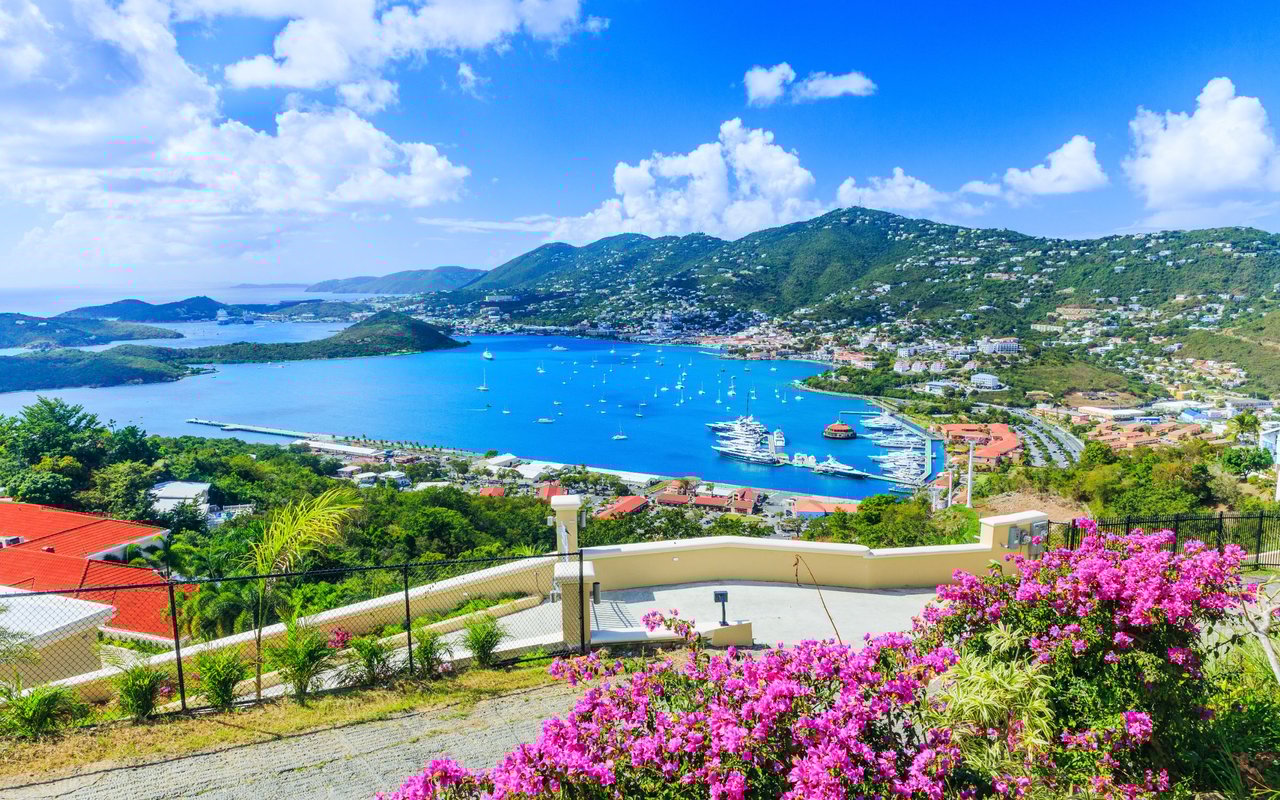
What Really Sets Your St. Croix Closing Costs?
September 10, 2026
September 10, 2026
Most buyers and sellers on St. Croix budget their transfer tax off the contract price. That is the wrong number often enough to matter. Under Virgin Islands law, the stamp tax is calculated on the property's value, and the Code sets a floor under that word: the Tax Assessor's assessed value. If the assessment is higher than what you agreed to pay, the assessment wins.
That single sentence does two things at once, and the second one surprises people. It raises the base the tax is calculated on, and because the rates step up in flat tiers rather than marginal brackets, it can also push the deal into a higher rate. A number you never negotiated, sitting in a government database you may never have opened, can quietly change both halves of the equation.
Title 33, Section 121 of the Virgin Islands Code sets the stamp tax at 2 percent for property valued up to $350,000, 2.5 percent from $350,001 to $1,000,000, 3 percent from $1,000,001 to $5,000,000, and 3.5 percent above $5,000,001. Then it adds the line that does the real work:
No real property may be valued at less than the assessed value by the Tax Assessor.
The text of the statute is worth reading before you sign anything. Note also what it does not say. It imposes the tax on the transfer without naming who pays it. That silence is why the stamp tax is a contract term on St. Croix rather than a default, and why it belongs in writing in the purchase agreement rather than in a conversation at the closing table. Confirm the current tier figures with your closing attorney or title agent, since the Code is amendable and the version published online is a compilation.
Mainland buyers read tiered tax rates the way they read income tax brackets, where only the dollars above the line get the higher rate. That is not how this reads. The rate attaches to the whole value. The arithmetic is unforgiving right at the thresholds.
| Value used | Rate | Stamp tax | What the last dollars cost |
|---|---|---|---|
| $349,000 | 2% | $6,980 | — |
| $351,000 | 2.5% | $8,775 | $2,000 more in price, about $1,795 more in tax |
| $999,000 | 2.5% | $24,975 | — |
| $1,010,000 | 3% | $30,300 | $11,000 more in price, $5,325 more in tax |
Now put the assessed value floor back in. A property under contract at $400,000 but assessed at $500,000 is taxed on $500,000. That is not simply $2,000 more. It moves the calculation from 2 percent on $400,000 to 2.5 percent on $500,000, a difference of roughly $4,500 on a deal where nothing about the price changed.
This would be trivia in a market whose prices cluster far from $350,000 and $1,000,000. St. Croix is not that market. In June 2026, At-large Senator Angel Bolques Jr. described a livable home without deferred maintenance on St. Croix as running roughly $350,000 to $500,000 or $550,000, compared with $400,000 and up on St. Thomas and roughly $750,000 to $1 million on St. John. He offered that framing while explaining why a luxury tax threshold borrowed from the states would not translate here.
Read that range against the table above. The ordinary St. Croix transaction, the one a relocating buyer or a family seller is most likely to be in, straddles the first cliff. The island's upper tier of sales sits on the second one. The tax structure has its two sharpest edges planted precisely where the most deals happen.
Here is the part that reverses a mainland instinct. Off-island buyers arrive with a mental line at the conforming loan limit, the point where a mortgage becomes a jumbo and underwriting gets heavier. For 2026 that line is $832,750 across most of the country.
It is not $832,750 here. The Virgin Islands is one of four areas with special statutory loan limits, alongside Alaska, Hawaii, and Guam. According to HousingWire, the Federal Housing Finance Agency set the 2026 baseline for those areas at $1,249,125, with a ceiling of $1,873,675. A $1.1 million St. Croix purchase can still be a conforming-limit conversation.
So on St. Croix the order of the two cliffs flips. The stamp tax rate changes at $1,000,001. The financing structure does not change until roughly $1.25 million. In most mainland markets the financing constraint bites first and the transfer tax is an afterthought. Here, a buyer stretching from $980,000 to $1,010,000 crosses a tax line while the loan stays conventional. Deal structure should follow that sequence, not the one imported from a mainland closing.
The practical constraint is the lender pool, which is short and locally licensed. Bank of St. Croix in Gallows Bay, FirstBank VI on King Street, Merchants Commercial Bank, Oriental Bank, Schaffer Mortgage on Queen Street, First Liberty Mortgage, and Banco Popular are the names that recur in St. Croix transactions. A higher limit is only useful if you are shopping where it applies.
The same number that can reset your closing costs also sets your carrying costs. According to Accounting Insights, Virgin Islands law requires real property to be assessed at 100 percent of fair market value, and the annual bill is that assessment multiplied by a millage rate, commonly cited at 0.003770 for residential and condominium property. On a $400,000 assessment that is roughly $1,508 a year before credits.
Homestead credits reduce it modestly. The Virgin Islands Consortium reports that the General Homestead credit maxes at $400, Veterans at $650, Seniors and Disabled at $500 each, and an owner may claim no more than two. St. Thomas Source reports that regardless of credits, every property owner pays a minimum of $180 a year. Those credits attach to the owner, not the parcel, so a buyer does not inherit the seller's. Applications and renewals run on an annual window in late winter, and the current year's deadline is worth confirming with the Office of the Tax Assessor rather than assumed from last year's notice.
The action item is the same in both directions. Pull the parcel's assessed value from the Lieutenant Governor's property tax portal at propertytax.vi.gov before you price a listing or write an offer, not after you are under contract.
Recording a deed on St. Croix is a sequence, as the Virgin Islands deed-recording guidance explains, and every step is a place a closing can stall, particularly for an owner signing from the mainland.
A timing rule deserves a calendar entry. Documents executed outside the territory must be stamped within 30 days of their arrival in the Virgin Islands, with the arrival date endorsed on the document and verified by affidavit. The penalty for late stamping is twice the stamp tax, capped at $100, and is appealable to the Commissioner of Finance. The dollar exposure is small. The delay is not, especially when a signature is traveling from Denver and the clock started the day it landed.
According to the Office of the Governor, VI Slice, the moderate-income gap financing program administered by the Virgin Islands Economic Development Authority, reopened in January 2026 after Governor Albert Bryan Jr. committed an additional $2 million. It has assisted more than 68 families since 2022, with grants up to $200,000 in aggregate; the Virgin Islands Consortium reports that up to $100,000 can go toward down payment and closing costs.
The deadlines are the operative facts as of early September 2026. The program's published FAQ states that all applications for secondary gap financing must be submitted by the primary lender on or before October 30, 2026, with the program sunsetting at year end. That is roughly seven weeks to select a participating lender, complete VIHFA homebuyer education, and get a file submitted. Eligibility includes three years of territory residency, with exceptions for returning residents and those born in the Virgin Islands, and a minimum $5,000 earnest money deposit, waived for veterans. Funding was fully utilized once already in late 2025, so confirm current availability with VIEDA or a participating lender before building a plan around it. The Office of the Governor says the program is for primary residences, not second homes or short-term rental purchases.
The Virgin Islands Consortium reported that a bill being prepared by Senator Bolques would add a one-time levy on sales of homes priced at $3 million and above, on a sliding scale beginning at 1 percent from $3 million to $5 million, 2 percent from $5 million to $7 million, and possibly 2.5 or 3 percent above that, with proceeds directed toward codifying and funding VI Slice. As reported in June 2026 the measure was with the Legislature's chief legal counsel and remained a proposal, not law. Owners at the top of the St. Croix market should track it rather than plan around it.
Who actually pays the stamp tax on St. Croix? The statute imposes the tax on the transfer without designating a payer, which makes it a negotiated term. What matters is that the allocation appears clearly in the purchase contract rather than surfacing at closing.
My assessment looks higher than my sale price. Is the contract price simply ignored? For stamp tax purposes the higher of the two governs, per the Code. If you believe the assessment misstates the property, that is a conversation with the Office of the Tax Assessor, and it is one to start well before a closing date is set.
How should existing credits and billed costs be handled at closing? Ask your closing attorney how existing credits and any billed taxes and sewer fees are handled in the proration.
None of the above is tax or legal advice, and the figures here are the published rules rather than a substitute for your own attorney and the Lieutenant Governor's offices.
Pulling an assessed value takes a few minutes. Discovering it at the closing table costs considerably more. If you are preparing to list, weighing an offer, or holding a St. Croix property from off-island and want the numbers checked before they harden into a contract, Sterling Point Real Estate will walk the parcel record, the tiers, and the timeline with you. Schedule a Consultation.
This article is general information, not legal, tax or financial advice. Consult a qualified professional about your situation.
Stay up to date on the latest real estate trends.


With strong market knowledge, strategic guidance, and attentive service, we walk beside you every step on your Real Estate journey. As a trusted Virgin Islands brokerage, we bring hands-on support, trusted advice, and a genuine love for island living, delivering an elevated experience built on professionalism, deep care, and lasting relationships.